
There is a moment most people experience at least once: bills stacking up faster than income, deadlines getting closer, and the quiet pressure of figuring out what to pay first. Loans, when used thoughtfully, can act as a stabilizing bridge rather than a burden. The difference lies in how they are chosen, structured, and managed.
This guide walks through ten practical, proven loan hacks that help you handle bills without feeling overwhelmed. These aren’t theoretical ideas—they reflect real financial behavior patterns that work when applied with discipline and awareness.
understanding the role of loans in managing bills
Loans often carry a negative reputation, but at their core, they are tools. When used correctly, they smooth cash flow, prevent late fees, and protect essential services like housing, utilities, and healthcare.
Here’s a simple breakdown of how loans can influence your financial stress level:
| financial situation | without loan strategy | with smart loan strategy |
|---|---|---|
| irregular income | missed payments | stabilized monthly flow |
| multiple due dates | confusion, penalties | consolidated schedule |
| high-interest debts | growing burden | reduced interest exposure |
| emergency expenses | panic borrowing | planned response |
The key is not avoiding loans altogether, but using them intentionally.
hack 1: prioritize high-interest bills with strategic borrowing
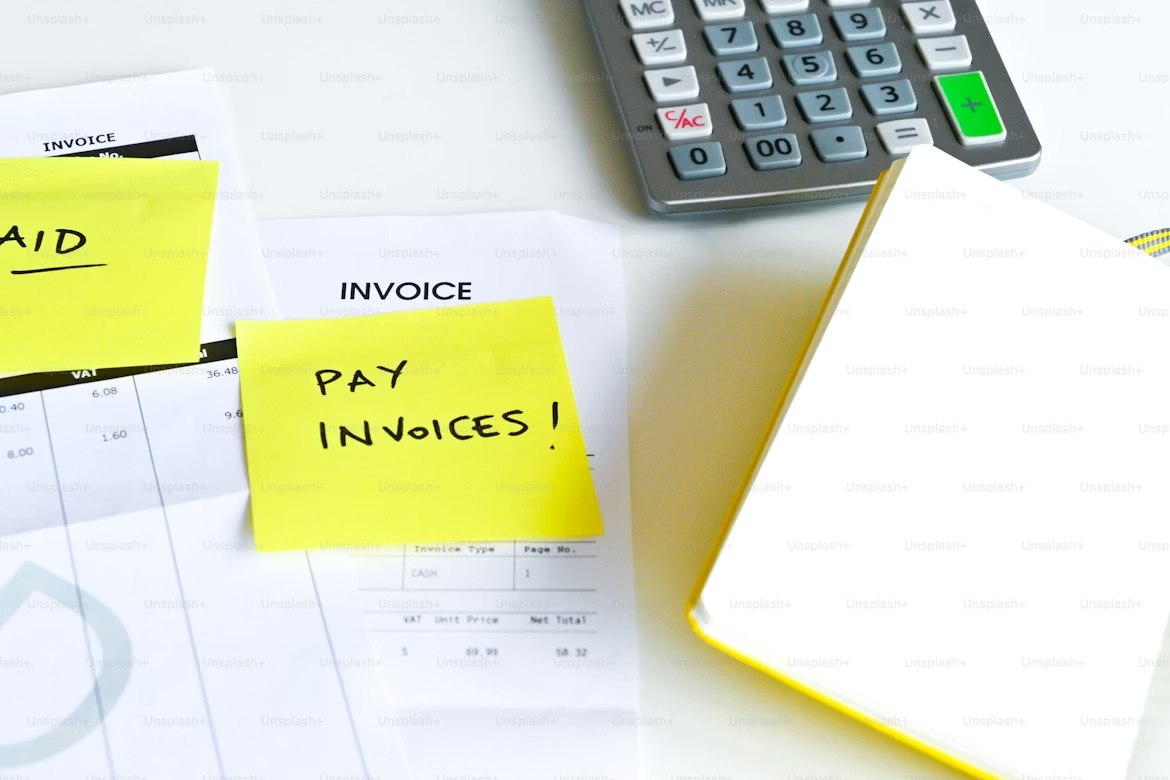
Not all bills are equal. Some carry higher financial consequences than others. Credit card balances, for instance, often have significantly higher interest rates than personal loans.
Here’s how prioritization works:
| bill type | average interest/penalty | priority level |
|---|---|---|
| credit cards | very high (20%+) | highest |
| payday loans | extremely high | critical |
| utility late fees | moderate | medium |
| rent/mortgage | varies but essential | highest (non-negotiable) |
| subscription services | low | lowest |
The hack is simple: if you must borrow, use lower-interest loans to eliminate high-interest obligations first. This reduces overall financial pressure quickly.
hack 2: use debt consolidation to simplify everything
Multiple bills mean multiple due dates, multiple stress points, and multiple chances to miss a payment. Debt consolidation merges these into a single loan with one monthly payment.
Example comparison:
| scenario | number of payments | total monthly payment | stress level |
|---|---|---|---|
| before consolidation | 5 | $800 | high |
| after consolidation | 1 | $650 | lower |
Beyond financial savings, the psychological benefit is significant. Simplicity reduces mental load.
hack 3: negotiate before you borrow
One of the most overlooked strategies is simply asking for better terms. Many service providers—especially hospitals, utilities, and even landlords—offer payment plans or temporary relief.
Before taking a loan, consider this approach:
| step | action | potential outcome |
|---|---|---|
| 1 | contact provider | delayed due date |
| 2 | request installment plan | smaller payments |
| 3 | ask for fee waiver | reduced total cost |
If you reduce the immediate burden, you may need a smaller loan or none at all.
hack 4: choose the right type of loan for the situation
Different loans serve different purposes. Choosing the wrong type can increase stress instead of reducing it.
| loan type | best use case | caution |
|---|---|---|
| personal loan | general bills | check interest rate |
| credit card balance transfer | high-interest debt | watch transfer fees |
| line of credit | flexible expenses | avoid overuse |
| payday loan | emergency only | extremely high cost |
The hack is alignment. Match the loan type to your need instead of defaulting to whatever is easiest to access.
hack 5: align loan repayment with your income cycle
Many people struggle not because they can’t afford payments, but because timing doesn’t match their income.
Example:
| income timing | bill due date | result |
|---|---|---|
| salary on 10th | bill on 5th | late payment |
| salary on 10th | bill on 12th | manageable |
Some lenders allow you to choose your payment date. Aligning it with your paycheck reduces friction and avoids unnecessary stress.
hack 6: borrow slightly more than needed (but with discipline)
This might sound counterintuitive, but borrowing a small buffer can prevent repeated borrowing.
Example scenario:
| loan amount | bills covered | leftover buffer |
|---|---|---|
| $1000 | $1000 | $0 (risk of new borrowing) |
| $1200 | $1000 | $200 (emergency cushion) |
The key is discipline. The buffer is not for spending—it’s for preventing future financial shocks.
hack 7: automate payments to avoid mental overload

Stress often comes from remembering due dates rather than the payments themselves. Automation removes that burden.
| benefit | impact |
|---|---|
| no missed payments | avoids late fees |
| consistent history | improves credit profile |
| reduced mental load | less stress |
However, always ensure sufficient balance before automation triggers.
hack 8: use short-term loans as a bridge, not a lifestyle
Short-term loans can be helpful, but only when used occasionally. Turning them into a habit creates a cycle of dependency.
Here’s a simple comparison:
| usage pattern | outcome |
|---|---|
| occasional use | temporary relief |
| frequent reliance | growing debt cycle |
The hack is mindset. Treat loans as temporary tools, not ongoing income supplements.
hack 9: track every borrowed dollar visually
When money is abstract, it’s easy to lose control. Visual tracking brings clarity.
loan tracking table example:
| loan source | amount borrowed | interest rate | monthly payment | remaining balance |
|---|---|---|---|---|
| personal loan | $2000 | 10% | $150 | $1200 |
| credit card | $800 | 22% | $80 | $600 |
Seeing this data regularly helps you make better decisions and stay motivated.
hack 10: build a repayment plan before borrowing
Most people think about repayment after taking a loan. That’s where stress begins.
Instead, reverse the process:
| step | question to answer |
|---|---|
| before borrowing | how will I repay this? |
| during borrowing | is this amount manageable? |
| after borrowing | am I following the plan? |
This forward-thinking approach prevents regret and keeps finances under control.
visual chart: impact of smart loan strategies over time
| month | without strategy (debt level) | with strategy (debt level) |
|---|---|---|
| month 1 | $3000 | $3000 |
| month 3 | $3200 | $2500 |
| month 6 | $3500 | $1800 |
| month 12 | $4000 | $800 |
The contrast shows how intentional planning changes financial direction.
emotional side of managing loans
Numbers tell one part of the story, but stress is often emotional. Financial pressure can affect sleep, focus, and relationships.
Some practical ways to reduce that stress:
- break large debts into smaller milestones
- celebrate progress, even small wins
- avoid comparing your situation to others
- focus on consistency instead of perfection
Managing loans is as much about mindset as it is about math.
common mistakes that increase stress
| mistake | why it hurts |
|---|---|
| borrowing without a plan | leads to confusion and panic |
| ignoring interest rates | increases long-term cost |
| missing payments | triggers penalties and anxiety |
| overborrowing | creates unnecessary burden |
Avoiding these mistakes is just as important as applying the hacks.
real-life inspired scenario
Imagine someone dealing with $2500 in bills and limited savings.
Without a strategy:
- uses credit cards repeatedly
- misses due dates
- stress keeps increasing
With a strategy:
- consolidates into a $2000 personal loan
- negotiates remaining bills
- automates payments
- tracks progress monthly
Result: lower monthly payments, fewer deadlines, and a clear path forward.
building your own stress-free loan system
Instead of relying on one tactic, combine several:
step 1: list all bills and debts
step 2: prioritize high-impact payments
step 3: choose the right loan type
step 4: consolidate where possible
step 5: automate and track
step 6: review progress monthly
This creates a system rather than a one-time fix.
faqs
- is taking a loan to pay bills a good idea?
It can be, if it reduces overall interest, prevents penalties, or stabilizes cash flow. The key is having a clear repayment plan.
- what is the safest type of loan for paying bills?
Personal loans from reputable lenders are generally safer than high-interest options like payday loans.
- how much should i borrow?
Only what you need, plus a small buffer if necessary. Overborrowing increases financial pressure.
- can consolidating debt hurt my credit score?
It may cause a small temporary dip, but consistent payments usually improve your score over time.
- how do i avoid getting trapped in a loan cycle?
Limit borrowing frequency, focus on repayment, and build an emergency fund gradually.
- what is the biggest mistake when using loans for bills?
Borrowing without understanding repayment terms or without a plan to pay it back.
final thoughts
Loans are often seen as a last resort, but they don’t have to be. When used strategically, they can provide breathing room, reduce financial chaos, and create structure where there was none.
The real shift happens when borrowing becomes intentional rather than reactive. With the right approach, paying bills doesn’t have to feel like a constant struggle. It becomes manageable, predictable, and far less stressful.