
Debt rarely arrives with a dramatic warning. More often, it creeps in quietly—through small monthly gaps, impulsive purchases, or unexpected expenses that don’t quite fit the budget. Before you realize it, what felt manageable becomes a long-term burden.
I didn’t wake up one day buried in debt. It was more subtle than that. A missed opportunity to save here, a poorly planned expense there. Over time, I realized that staying debt-free isn’t just about earning more—it’s about managing money smarter.
What follows are six practical financing hacks that helped me avoid debt altogether. These aren’t extreme strategies or unrealistic rules. They’re simple shifts in how money is handled daily, supported by real examples, structured tables, and visual breakdowns.
hack 1: reverse budgeting instead of traditional budgeting
Most people budget by listing expenses first—rent, food, utilities—and then saving whatever is left. I used to do the same. The problem? There was rarely anything left.
Reverse budgeting flips that logic. You prioritize saving and essential goals first, then adjust your spending accordingly.
Here’s how it works in practice:
- Set a fixed percentage of your income for savings (even 10–20%)
- Deduct that amount immediately when you receive income
- Use the remaining balance for all expenses
Monthly income allocation example
| Category | Traditional Budget | Reverse Budget |
|---|---|---|
| Income | $2,000 | $2,000 |
| Savings | $100 | $400 |
| Expenses | $1,900 | $1,600 |
| Leftover | $0 | $0 |
Visual comparison
Traditional: Savings ███
Reverse: Savings █████████
The difference is psychological as much as financial. When savings become non-negotiable, unnecessary spending naturally decreases.
Over a year, that small shift compounds significantly.
Annual savings comparison
| Method | Monthly Savings | Yearly Total |
|---|---|---|
| Traditional | $100 | $1,200 |
| Reverse Budgeting | $400 | $4,800 |
That’s not just savings—that’s a buffer against future debt.
hack 2: creating a “shock absorber” fund
Emergency funds are often discussed, but I found them too abstract at first. Saving for a vague “emergency” didn’t feel urgent.
So I reframed it as a “shock absorber” fund—a small, accessible reserve specifically designed to handle unexpected expenses without resorting to debt.
Instead of aiming for a large amount immediately, I started small.
Shock absorber tiers
| Tier Level | Target Amount | Purpose |
|---|---|---|
| Tier 1 | $300 | Minor emergencies |
| Tier 2 | $1,000 | Medium unexpected expenses |
| Tier 3 | $3,000 | Major disruptions |
Progress chart
Tier 1: ███
Tier 2: ███████
Tier 3: █████████████
This fund covered things like:
- Car repairs
- Medical bills
- Urgent travel
Without it, these would have gone straight onto credit. With it, they became manageable inconveniences instead of financial setbacks.
hack 3: using the 48-hour spending rule
Impulse spending is one of the fastest ways to drift toward debt. I didn’t notice how often I bought things I didn’t truly need until I introduced a simple delay.
The rule is straightforward:
- For any non-essential purchase, wait 48 hours before buying
- Re-evaluate whether the purchase still feels necessary
What surprised me most was how often the urge disappeared.
Impulse vs delayed purchases
| Item Type | Immediate Buy Rate | After 48 Hours |
|---|---|---|
| Clothing | 80% | 30% |
| Gadgets | 70% | 25% |
| Home items | 60% | 20% |
Behavior shift chart
Before: █████████████████
After: ███████
This simple pause created a natural filter for unnecessary expenses. Over time, it significantly reduced spending without feeling restrictive.
hack 4: splitting income into multiple accounts
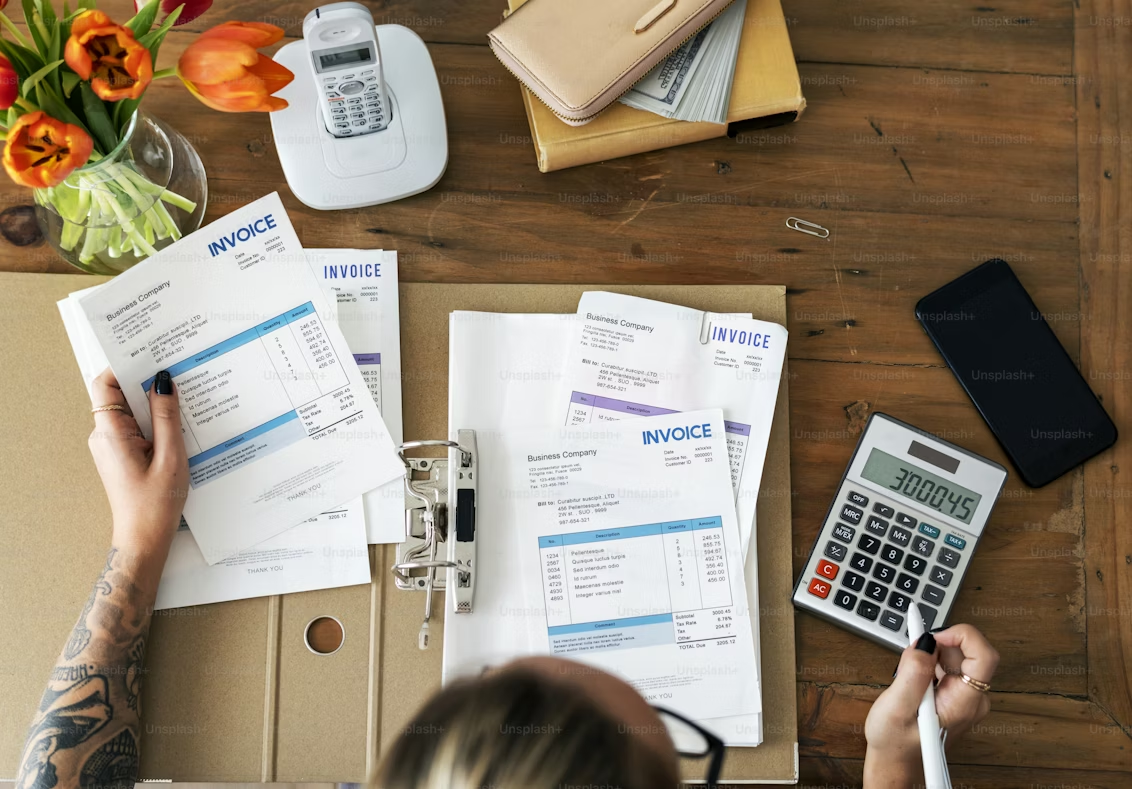
Keeping all money in a single account made it too easy to overspend. There was no clear boundary between essentials, savings, and discretionary spending.
Dividing income into separate accounts changed that.
Basic account structure
| Account Type | Purpose |
|---|---|
| Bills account | Fixed monthly expenses |
| Savings account | Emergency and long-term |
| Spending account | Daily and discretionary use |
Example allocation
| Category | Percentage | Amount ($2,000 income) |
|---|---|---|
| Bills | 50% | $1,000 |
| Savings | 25% | $500 |
| Spending | 25% | $500 |
Visual breakdown
Bills: █████████████
Savings: ██████
Spending: ██████
Once the spending account runs out, that’s it—no dipping into savings or bills. This built-in limitation prevented accidental overspending.
hack 5: turning irregular income into predictable cash flow
If your income fluctuates—even slightly—it can lead to poor financial decisions. I experienced this during periods of variable earnings.
The solution was to standardize my monthly “paycheck.”
Here’s the method:
- Calculate your average monthly income over 6–12 months
- Pay yourself a fixed amount each month
- Save excess income during higher-earning months
Income smoothing example
| Month | Actual Income | Fixed Pay | Surplus Saved |
|---|---|---|---|
| January | $2,500 | $2,000 | $500 |
| February | $1,800 | $2,000 | -$200 (covered) |
| March | $2,200 | $2,000 | $200 |
Stability chart
Actual: ███████████████ fluctuating
Fixed: █████████ stable
This approach reduced financial anxiety and eliminated the temptation to overspend during “good” months.
hack 6: automating everything that matters

Manual financial management leaves too much room for error. Missed payments, forgotten transfers, and inconsistent saving habits all increase the risk of debt.
Automation removes that risk.
Key areas to automate
| Financial Task | Benefit |
|---|---|
| Bill payments | Avoid late fees |
| Savings transfers | Consistent growth |
| Investment deposits | Long-term accumulation |
Automation impact
| Before Automation | After Automation |
|---|---|
| Missed payments | 3 per year |
| Savings rate | 10% |
Consistency chart
Before: █████
After: ███████████
Once set up, automation works quietly in the background, reinforcing good habits without daily effort.
combined impact of all six hacks
Individually, each of these strategies offers modest savings. Together, they create a strong financial system that naturally resists debt.
Annual financial improvement estimate
| Strategy | Estimated Benefit |
|---|---|
| Reverse budgeting | $3,600 |
| Shock absorber fund | $1,000 (avoided debt) |
| 48-hour rule | $1,200 |
| Multiple accounts | $800 |
| Income smoothing | $600 |
| Automation | $500 |
| Total | $7,700 |
Savings distribution chart
Reverse budgeting: ███████████
Emergency buffer: ████
Delayed spending: █████
Account structure: ████
Income smoothing: ███
Automation: ██
These numbers are estimates, but they highlight a key principle: avoiding debt isn’t about one big decision—it’s about many small, consistent ones.
real-life scenario comparison
To put things into perspective, here’s a simplified comparison between two financial approaches.
Scenario comparison
| Category | Without Hacks | With Hacks |
|---|---|---|
| Monthly savings | $100 | $500 |
| Emergency readiness | Low | High |
| Impulse spending | High | Low |
| Debt risk | High | Minimal |
Outcome visualization
Without system: █████████████████
With system: ███████
The difference isn’t just financial—it’s mental. Less stress, fewer surprises, and more control.
final reflections
Staying debt-free isn’t about perfection. It’s about building systems that protect you from your own habits and from life’s unpredictability.
These six hacks didn’t require a higher income or extreme sacrifices. They required awareness, structure, and a willingness to adjust how money flows.
Some of them felt small at first. Waiting 48 hours before buying something doesn’t seem life-changing. Neither does splitting your income into different accounts. But over time, these actions stack up.
If there’s one pattern that stands out, it’s this: the more intentional your financial system becomes, the less likely you are to fall into debt.
frequently asked questions
- how much should I save before focusing on investments?
It’s generally wise to build at least a basic emergency fund (around $1,000 or more depending on your situation) before starting investments. - does reverse budgeting work for low incomes?
Yes, even small amounts can be prioritized. The key is consistency, not size. - is the 48-hour rule too restrictive?
Not really. It only applies to non-essential purchases and often reduces regret rather than enjoyment. - how many accounts should I ideally have?
At minimum, three: bills, savings, and spending. More can be added for specific goals if needed. - what if my income is highly unpredictable?
Income smoothing works well in this case. Base your monthly budget on your lowest average income to stay safe. - can automation lead to overdrafts?
It can if not managed properly. Always ensure your main account has sufficient balance before automating payments.
—
In the end, financial stability isn’t about luck. It’s about creating a structure where good decisions happen automatically and bad ones become harder to make.