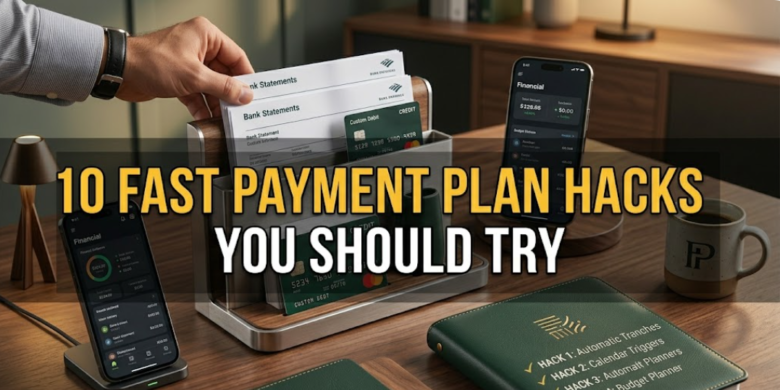
There’s a quiet tension that builds when bills begin to stack up faster than they can be paid. It’s not always about overspending. Sometimes it’s timing, unexpected costs, or irregular income. Payment plans exist to ease that pressure, but they can either become a smart financial tool—or another layer of stress—depending on how they’re used.
Most people think of payment plans as a last resort. In reality, they can be used proactively to stay in control of cash flow, avoid penalties, and reduce financial anxiety. The difference lies in strategy.
This guide explores ten fast, practical payment plan hacks that can help you manage obligations more efficiently without falling into financial strain.
Understanding how payment plans work
At their core, payment plans are structured agreements to divide a total cost into smaller, scheduled payments. They are common across many areas:
| Category | Common Examples | Payment Structure |
|---|---|---|
| Healthcare | Hospital bills, treatments | Monthly installments |
| Education | Tuition fees | Term-based payments |
| Utilities | Electricity, water | Deferred billing cycles |
| Retail | Appliances, electronics | Installment purchases |
The flexibility is helpful—but without planning, multiple payment plans can overlap and create hidden pressure.
Hack 1: Align payment dates with your income cycle
One of the most effective ways to reduce stress is to schedule payments around when you actually receive money.
| Income Type | Ideal Payment Timing |
|---|---|
| Monthly salary | Within 3–5 days of payday |
| Weekly income | Spread across weeks |
| Irregular income | After confirmed inflow |
Misaligned payment dates often lead to late fees—even when you technically have enough income.
Hack 2: Consolidate multiple plans into one manageable schedule
Handling multiple small plans can feel easier at first, but it often becomes chaotic.
| Scenario | Result |
|---|---|
| Multiple scattered plans | Missed payments, confusion |
| Consolidated payment | Clear tracking, less stress |
If possible, combine obligations into a single structured plan or align due dates to reduce mental load.
Hack 3: Negotiate before committing to a plan
Many people accept the first payment plan offered. That’s a missed opportunity.
| Negotiation Option | Possible Benefit |
|---|---|
| Lower monthly payment | Better affordability |
| Longer duration | Reduced pressure |
| Fee waivers | Lower total cost |
Even a brief conversation can lead to more favorable terms.
Hack 4: Use the “50-30-20 adjusted rule” for installments
Traditional budgeting rules can be adapted for payment plans.
| Category | Suggested Allocation |
|---|---|
| Essentials | Around half |
| Flexible spend | Around one-third |
| Savings/Debt | Remaining portion |
When payment plans fall into the “debt” category, ensure they don’t consume too much of your income.
Hack 5: Prioritize high-impact payments first
Not all payment plans carry the same consequences if delayed.
| Payment Type | Impact of Delay |
|---|---|
| Rent/Mortgage | Very high |
| Utilities | Service disruption |
| Retail installments | Lower impact |
Focus on high-impact obligations first to avoid serious consequences.
Hack 6: Build a mini-buffer for installment payments
Even a small buffer can prevent missed payments during tight months.
| Buffer Size | Effect |
|---|---|
| Minimal | Covers small gaps |
| Moderate | Handles short disruptions |
| Strong | Full flexibility |
The buffer doesn’t need to be large—it just needs to exist.
Hack 7: Track every payment visually

A visual system makes it easier to stay organized.
| Month | Payment A | Payment B | Payment C | Status |
|---|---|---|---|---|
| Jan | Paid | Paid | Pending | Ongoing |
| Feb | Paid | Pending | Pending | Alert |
Seeing everything in one place reduces the chance of forgetting due dates.
Hack 8: Avoid overlapping too many short-term plans
Short-term plans often have higher monthly payments. Taking several at once can overload your budget.
| Plan Type | Monthly Burden |
|---|---|
| Short-term | High |
| Long-term | Lower |
Balance is key. A mix of durations can help maintain stability.
Hack 9: Automate payments where possible
Automation reduces the risk of human error.
| Method | Benefit |
|---|---|
| Bank auto-debit | No missed deadlines |
| App reminders | Better awareness |
| Calendar alerts | Backup system |
However, always ensure sufficient balance to avoid penalties.
Hack 10: Review and adjust plans regularly
Payment plans are not static. Your financial situation may change, and your plans should reflect that.
| Review Frequency | Purpose |
|---|---|
| Monthly | Track progress |
| Quarterly | Adjust strategy |
| Annually | Reassess commitments |
Regular reviews keep your plan realistic and manageable.
Common pitfalls to avoid
Even well-structured payment plans can go wrong if certain mistakes are made.
| Mistake | Outcome |
|---|---|
| Overcommitting income | Financial strain |
| Ignoring small fees | Increased total cost |
| Missing due dates | Penalties |
| Lack of tracking | Confusion and stress |
Avoiding these pitfalls is just as important as applying the hacks.
A comparison of payment plan strategies
| Approach | Short-Term Effect | Long-Term Outcome |
|---|---|---|
| Unplanned installments | Temporary relief | Ongoing stress |
| Structured payment strategy | Stability | Financial control |
The structured approach may require more effort upfront, but it pays off over time.
Building a sustainable payment routine
Consistency matters more than perfection. A simple routine can help:
| Week | Focus Area |
|---|---|
| Week 1 | Review upcoming payments |
| Week 2 | Check account balances |
| Week 3 | Update tracking system |
| Week 4 | Adjust next month’s plan |
This routine takes minimal time but creates strong financial awareness.
The psychological side of payment plans
Payment plans are not just financial tools—they affect how you feel about money. Too many obligations can create a sense of being trapped, even if everything is technically manageable.
On the other hand, a well-structured plan creates clarity. You know what’s due, when it’s due, and how it fits into your income. That clarity reduces stress and improves decision-making.
Small changes, big impact
Each of these hacks may seem minor on its own. But together, they create a system that keeps your finances organized and predictable.
| Combined Strategy | Result |
|---|---|
| Alignment + tracking | Fewer missed payments |
| Negotiation + prioritization | Lower financial pressure |
| Buffer + automation | Greater reliability |
The goal is not to eliminate payment plans—but to make them work for you, not against you.
FAQs
- What is the best way to manage multiple payment plans
The best approach is to align due dates, track all payments in one place, and prioritize high-impact obligations. - Can I change a payment plan after agreeing to it
In many cases, yes. You can contact the provider to renegotiate terms if your financial situation changes. - How many payment plans are too many
There is no fixed number, but if your monthly obligations start to feel difficult to track or manage, it’s a sign you may have too many. - Is it better to choose short-term or long-term plans
Short-term plans reduce total cost but increase monthly pressure. Long-term plans are easier monthly but may cost more overall. - What happens if I miss a payment
Consequences vary but may include late fees, penalties, or negative effects on your financial record. - Should I automate all payments
Automation is helpful, but it should be combined with regular monitoring to ensure sufficient funds are available.
Payment plans are often seen as a fallback option, but when used strategically, they become a powerful financial tool. These ten fast hacks are not about restriction—they are about control. With the right approach, payment plans can help you stay organized, avoid unnecessary stress, and move steadily toward financial stability.