
Money has a way of slipping through unnoticed when you’re not paying close attention. Not in dramatic, obvious ways—but in small, repeatable patterns that quietly drain your resources over time. A slightly higher interest rate here, an unnecessary fee there, a missed opportunity to renegotiate something you assumed was fixed. None of it feels urgent in the moment. But over months and years, it adds up to something substantial.
I didn’t realize how much I was losing until I started looking closely. Not obsessively, not with spreadsheets and financial jargon—but with curiosity. Why was I paying this much? Was there an alternative? Did I actually need this, or had I just gotten used to it?
The five financing hacks below didn’t come from a course or a book. They came from trial, error, and a few uncomfortable realizations. Each one is simple on its own. Together, they reshaped how I handle money—and saved me far more than I expected.
hack 1: renegotiate everything you think is fixed
For a long time, I assumed that certain financial commitments were non-negotiable. Loan terms, service fees, subscription costs—they all felt permanent once agreed upon.
That assumption turned out to be expensive.
The first time I called to renegotiate a loan interest rate, I expected resistance. Instead, I got options. Not dramatic ones, but enough to make a difference. A slightly lower rate. A revised payment schedule. Even a waiver on a minor fee.
What changed wasn’t the system—it was my willingness to ask.
Here’s a simplified example of how small adjustments can impact long-term costs:
| Loan Amount (PKR) | Original Interest Rate | New Rate After Negotiation | Total Interest Paid (Before) | Total Interest Paid (After) | Savings |
|---|---|---|---|---|---|
| 500,000 | 18% | 15% | 270,000 | 210,000 | 60,000 |
| 1,000,000 | 17% | 14.5% | 510,000 | 435,000 | 75,000 |
These aren’t hypothetical extremes. Even a 1–2% reduction can shift the total cost significantly, especially over longer terms.
The key is timing and approach:
- Reach out after a consistent payment history
- Mention competitor rates if you know them
- Ask directly: “Are there any options to reduce my rate or fees?”
You won’t always get a yes. But you’ll never get one if you don’t ask.
hack 2: automate savings before you see your money
This one sounds almost too simple, but it’s one of the most effective changes I made.
Instead of saving what was left at the end of the month, I started moving a fixed amount into savings the moment income arrived. Not a large amount—just something consistent.
The psychological shift is subtle but powerful. When the money never sits in your main account, you don’t factor it into your spending decisions.
Here’s what that looks like over time:
| Monthly Savings (PKR) | Annual Total | 3-Year Total | 5-Year Total |
|---|---|---|---|
| 5,000 | 60,000 | 180,000 | 300,000 |
| 10,000 | 120,000 | 360,000 | 600,000 |
| 20,000 | 240,000 | 720,000 | 1,200,000 |
The numbers aren’t surprising. What’s surprising is how painless it becomes once it’s automated.
There’s no decision fatigue. No monthly debate about whether you can “afford” to save. It just happens.
Over time, that consistency builds a buffer—a financial cushion that reduces reliance on loans, credit, or emergency borrowing.
hack 3: pay attention to the total cost, not the monthly payment
This mistake is incredibly common, and I made it more than once.
A low monthly payment feels manageable. It fits neatly into your budget. It doesn’t disrupt your routine. But it can hide a much larger cost spread over time.
I learned this the hard way with a consumer purchase that seemed affordable—until I calculated the total amount paid.
Here’s how different financing structures compare:
| Purchase Price (PKR) | Monthly Payment | Duration | Total Paid | Extra Cost |
|---|---|---|---|---|
| 100,000 | 10,000 | 10 months | 100,000 | 0 |
| 100,000 | 5,500 | 24 months | 132,000 | 32,000 |
| 100,000 | 3,800 | 36 months | 136,800 | 36,800 |
The lower the monthly payment, the higher the total cost—because time adds interest, fees, or both.
Now, before agreeing to any financing, I ask one question:
“What is the total amount I will pay by the end?”
That single question cuts through marketing language and reveals the real cost.
Sometimes a higher monthly payment is actually the cheaper option in the long run.
hack 4: use “cooling-off time” before financial decisions
Impulse spending isn’t always about buying unnecessary things. Sometimes it’s about agreeing too quickly—signing up for a plan, committing to a service, or accepting terms without comparison.
Introducing a simple rule changed that for me: wait 24 hours before making any non-urgent financial decision.
It sounds small, but it interrupts the emotional momentum that often drives spending.
Here’s what that pause can reveal:
- A cheaper alternative you hadn’t considered
- A realization that the purchase isn’t necessary
- Better terms from another provider
Consider this behavioral impact:
| Decision Type | Immediate Action Outcome | 24-Hour Delay Outcome |
|---|---|---|
| Gadget purchase | Bought at full price | Found 15% discount |
| Loan acceptance | Higher interest rate | Negotiated lower rate |
| Subscription signup | Unused after 2 months | Not purchased |
The savings aren’t just financial—they’re mental. You avoid regret, reduce clutter, and make decisions with clarity rather than urgency.
hack 5: track small expenses—they’re not as small as they look
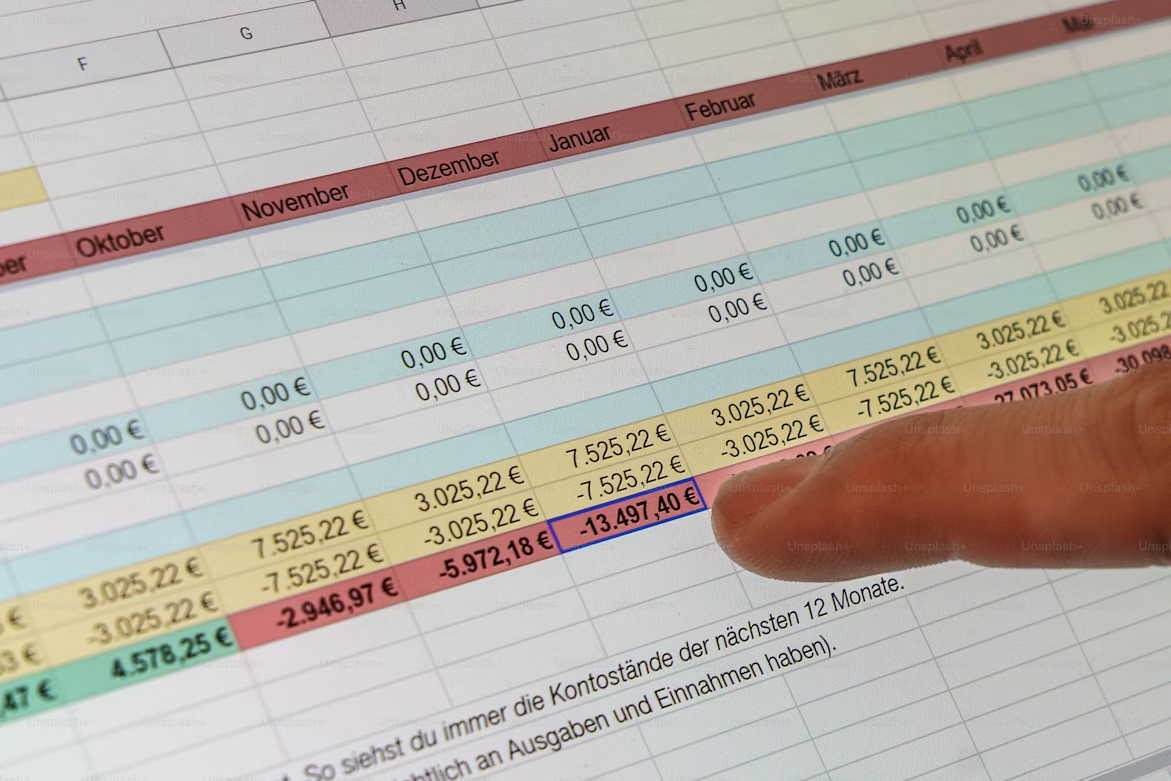
I used to ignore minor expenses. A quick delivery fee, a small service charge, a daily convenience purchase—they didn’t seem worth tracking.
But when I finally added them up, the total was uncomfortable.
Small, repeated costs have a way of blending into the background while quietly accumulating.
Here’s a breakdown that changed my perspective:
| Expense Type | Daily Cost (PKR) | Monthly Total | Annual Total |
|---|---|---|---|
| Coffee/snacks | 300 | 9,000 | 108,000 |
| Delivery fees | 200 | 6,000 | 72,000 |
| App subscriptions | — | 2,500 | 30,000 |
| Misc small purchases | 250 | 7,500 | 90,000 |
| Total | — | 25,000 | 300,000 |
That’s not pocket change—it’s a significant portion of income.
Tracking doesn’t mean eliminating everything. It means becoming aware.
Once you see the pattern, you naturally start adjusting:
- Fewer unnecessary orders
- Consolidated subscriptions
- More intentional spending
The result isn’t restriction—it’s control.
a combined savings overview
Each hack works on its own. But their real power shows when combined.
Here’s a realistic monthly comparison:
| Category | Before (PKR) | After (PKR) | Savings |
|---|---|---|---|
| Loan interest/fees | 15,000 | 12,000 | 3,000 |
| Untracked expenses | 25,000 | 15,000 | 10,000 |
| Subscription/services | 5,000 | 2,500 | 2,500 |
| Impulse decisions | 8,000 | 3,000 | 5,000 |
| Total | 53,000 | 32,500 | 20,500 |
That’s over 20,000 PKR saved each month—without drastic lifestyle changes.
Over a year, that becomes:
| Monthly Savings | Annual Savings |
|---|---|
| 20,500 | 246,000 |
And over several years, the impact compounds further.
why these habits matter more than income
It’s easy to assume that financial improvement comes from earning more. And while income matters, spending behavior often has a more immediate impact.
Two people with the same income can have completely different financial outcomes based on how they manage money.
These hacks don’t require higher earnings. They require awareness, small adjustments, and consistency.
They also create something less tangible but equally important: confidence.
When you understand where your money is going and why, financial decisions stop feeling overwhelming.
building a system that works quietly
The goal isn’t to think about money all the time. It’s to set up systems that handle it for you.
A few simple habits that reinforce these hacks:
- Automate savings and bill payments
- Review expenses once a week (not obsessively, just briefly)
- Question major financial commitments before agreeing
- Keep a simple record of loans, rates, and due dates
Over time, these habits become routine. You don’t feel like you’re “managing money”—you just are.
faqs
- do small financial changes really make a big difference?
Yes. Small, consistent adjustments often have a greater long-term impact than occasional large changes. The key is repetition over time.
- is it always possible to negotiate loan terms?
Not always, but it’s more common than people think. Especially if you have a good payment history or can reference competitive offers.
- how much should i automate for savings?
Start with an amount that feels comfortable and sustainable. Even a small fixed amount can grow significantly over time.
- why is focusing on total cost more important than monthly payments?
Because monthly payments can be misleading. A lower payment often means a longer duration and higher overall cost.
- how do i stay consistent with tracking expenses?
Keep it simple. Use a basic app or notebook and focus on patterns rather than perfection. Consistency matters more than detail.
- what’s the easiest hack to start with?
Begin with tracking small expenses. It creates immediate awareness and often leads to natural improvements in spending behavior.
Looking back, none of these changes were dramatic. There was no single moment where everything shifted overnight. It was gradual—almost unnoticeable at first.
But that’s exactly why it worked.
The savings didn’t come from extreme discipline or sacrifice. They came from paying attention, asking better questions, and making slightly better decisions, repeatedly.
And over time, those small decisions added up to something substantial—something that felt less like restriction and more like freedom.